

A breast screening invitation in Cambridge now comes with a choice. Women can have their mammograms read by two NHS specialists as usual, or take part in a trial that lets AI help read the images. The X-ray appointment stays the same. What changes is who looks at them afterward.
Cambridge University Hospitals announced on November 23 that the first women had joined the study, called EDITH. The trial asks whether software can safely take on some of the work of a second reader. At least one human expert will examine every mammogram.
Who takes the second look?
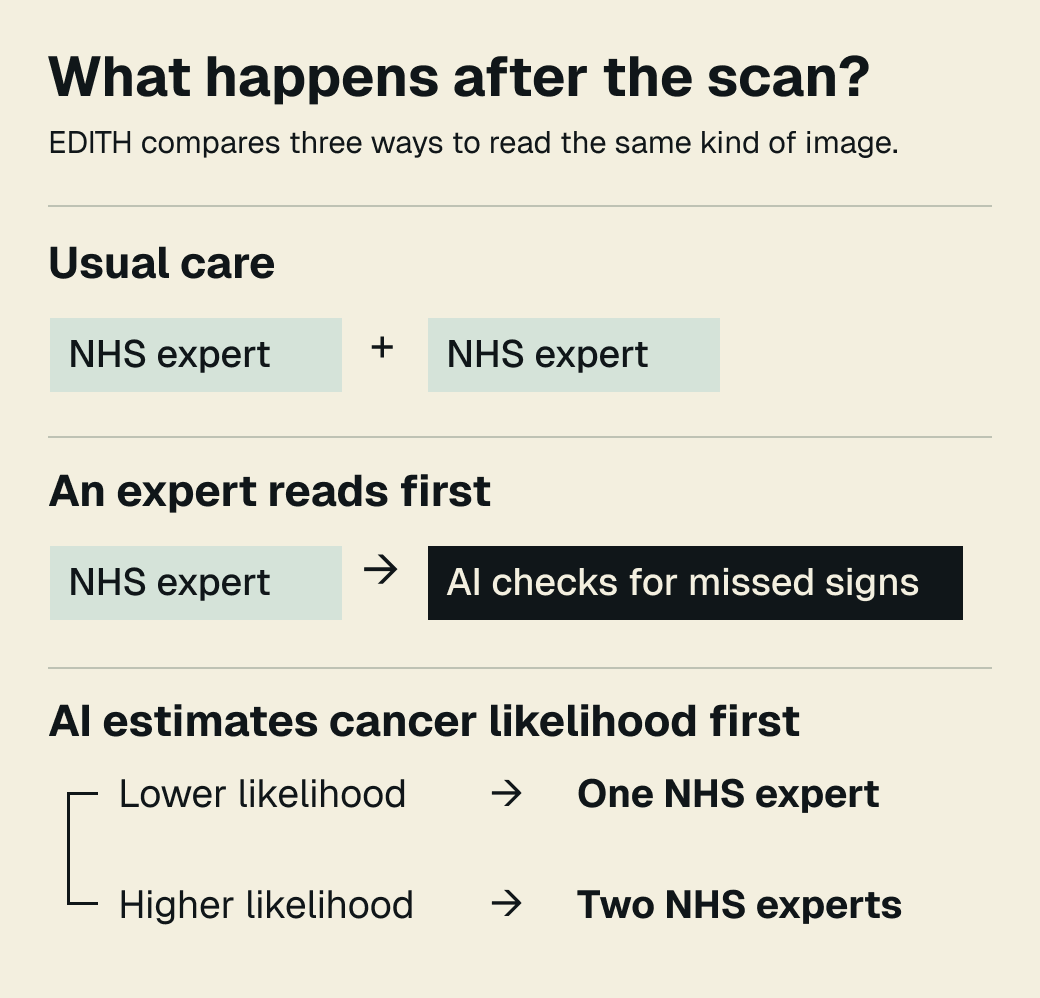
The answer depends on the day of the appointment. Researchers randomly assign clinic days to one of three reading methods. On some days, two specialists read the images as usual. On others, a specialist reads first and AI checks for signs the reader may have missed.
The third method reverses the order. Software assesses the images first. If it rates the likelihood of cancer as low, one specialist reads them. A high rating sends the same images to two specialists. When readers disagree about calling someone back, NHS experts review the case and make the decision.
What would count as a better read?
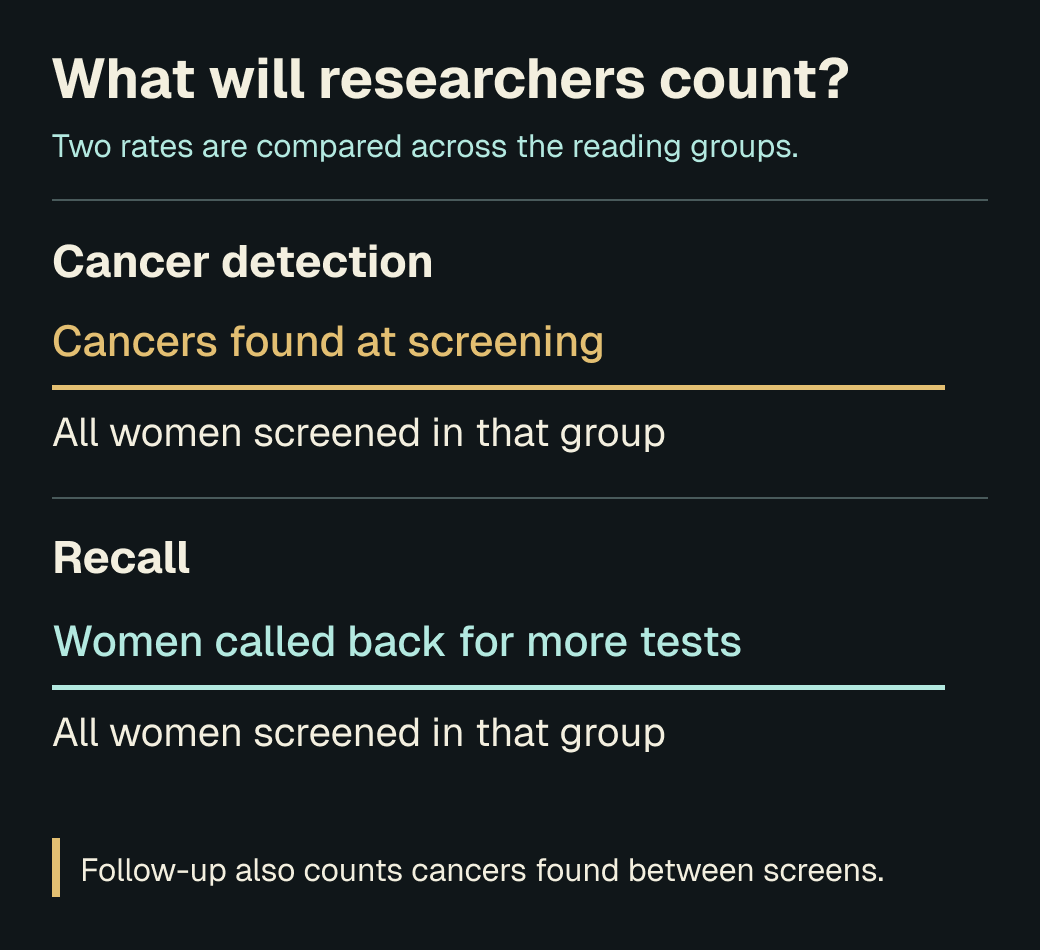
For the person opening a results letter, a call to come back means another appointment and more tests. Some of those tests will find cancer. Others will give the all-clear. That is why the researchers will compare two numbers side by side for each group. Among all the women screened, how many are found to have cancer? How many are called back?
A screening result tells only part of the story. The team will also track cancers diagnosed between screening rounds. That follow-up can reveal differences the initial count would miss.
EDITH aims to include 660,000 women across about 30 screening centres. The Royal College of Radiologists sees a chance to free up specialists’ time in a short-staffed service. Whether that happens, and what it means for the women waiting for their letters, are questions the trial has just begun to answer.
Archive mammograms courtesy of Dr. Kathy Cho, NIH Radiology, and the American College of Radiology, via the National Cancer Institute. Both images predate EDITH.

